What dreams about animals mean: fish, snakes, cats and dogs
Explore animal dreams through personal experience, folklore and research. Fish, snakes, cats, rats, dogs and insects do not come with one fixed meaning.
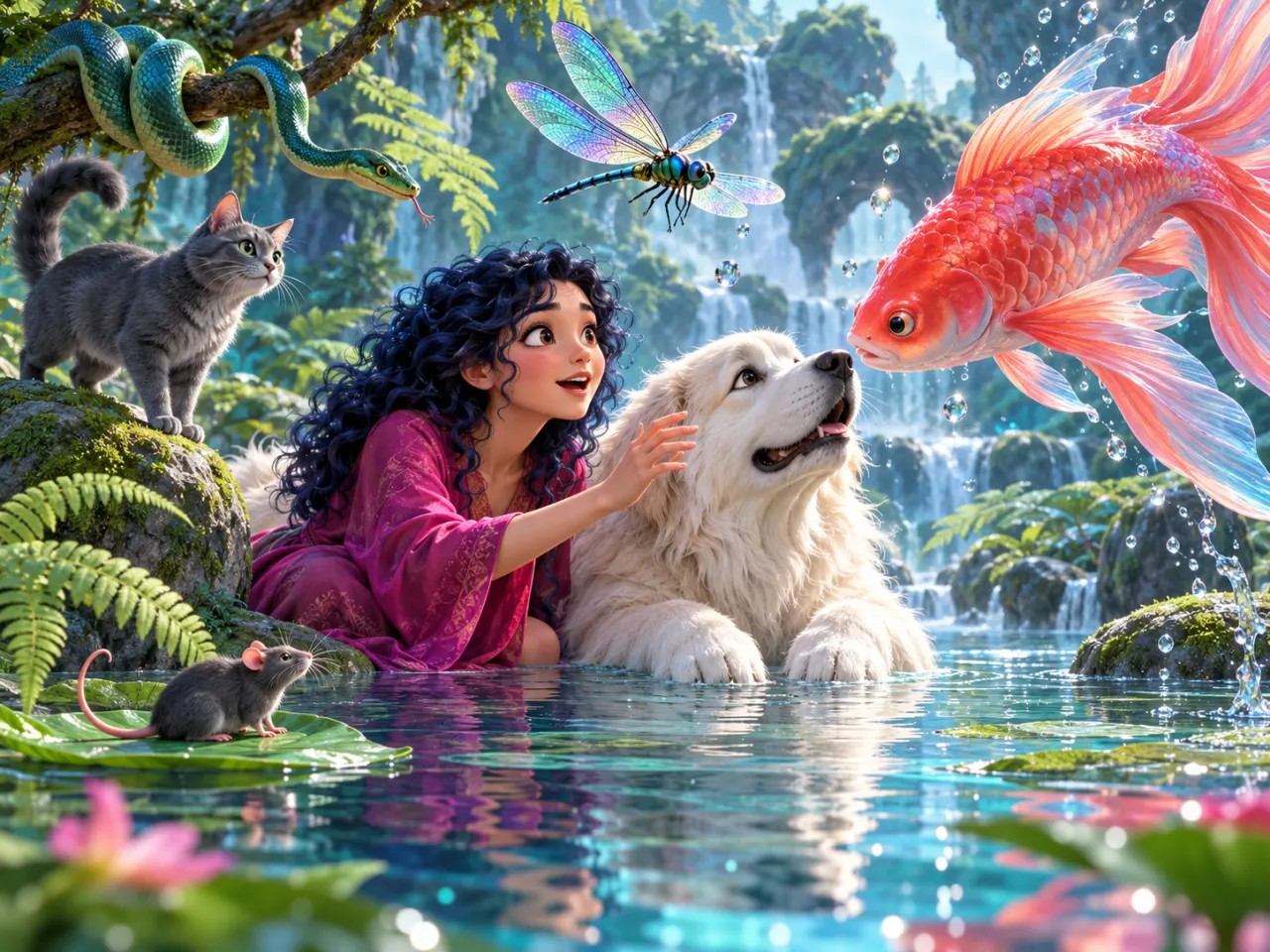
“I caught a huge silver fish with my hands,” you say over breakfast. Someone immediately replies that fish mean pregnancy. You laugh, but the idea follows you through the day.
Animals make memorable dream characters. A snake coils around a leg, a dog follows you home or a cat you lost years ago returns for a stroke. A ready-made meaning is tempting, yet the same animal can feel entirely different to different people.
An animal in a dream does not come with one fixed message. Its behaviour, your feelings and your own experience with that animal are the most useful starting points.
Four questions before opening a dictionary
- What does this animal mean to me? A much-loved pet and a creature you fear begin with different associations.
- What was it doing? Resting, attacking, hiding, following or asking for care?
- How did I feel? Warmth, disgust, fear, fascination or relief can change the reading.
- What in waking life has a similar feeling? Consider recent events before searching for a distant prediction.
Dream dictionaries, myths and folklore can add perspectives. They cannot establish that a person is untrustworthy or that a medical event is about to happen.
Fish
Folk meanings
The Russian association between catching fish and pregnancy is widely known. Other dictionaries connect fish in clear water with prosperity and a dead fish with disappointment. These are traditional associations, not tests of pregnancy or financial forecasts.
Different scenes
A fish swimming freely may feel very different from one struggling out of water. Catching a fish could suggest achieving something, while murky water might bring uncertainty to mind. Notice whether the dream involved success, care, hunger or discomfort before assigning it a meaning.
Myth and psychology
Fish appear in early Christian symbolism, in the Hindu story of Vishnu as Matsya and in many accounts of abundance. Jungian interpretations may connect the depths of water with what is not yet fully conscious. These are interpretive traditions, not proof that a fish always represents a hidden idea.
If pregnancy is a real possibility, a dream cannot answer the question. Use a pregnancy test and appropriate medical advice rather than a symbol.
Snakes
Why the image is so ambiguous
Many dictionaries warn of enemies or betrayal. Yet the snake also appears on the staff of Asclepius, associated with healing, and shedding skin can suggest renewal. Some Slavic traditions treated a household snake as a protector. There is no single cultural meaning to extract.
What happened in the dream?
A bite may connect with hurt or a perceived threat; constriction with feeling trapped. Watching a calm snake may evoke curiosity rather than danger. Killing it could feel like overcoming fear, but might also feel disturbing. The dreamer's response matters.
Freud linked snakes with sexual symbolism. Jungian approaches may explore instinct, the shadow or transformation. Neither approach gives you grounds to accuse someone of betrayal because a snake appeared.
Why snakes appear without everyday contact
Dreams combine personal experience with stories, images and fears. Research on animal dreams, including Michael Schredl's work, finds both continuity with real-life pets and appearances by creatures rarely encountered in waking life. Studies of attention to snake images suggest that they can be especially noticeable, but that does not determine the meaning of an individual dream.
Cats
Conflicting dictionary entries
Some European and Russian dictionaries associate cats with deception or rivalry. Other readings emphasise affection, independence and comfort. Black cats themselves have opposite good-luck associations across cultures, as discussed in good-luck signs around the world.
Affection, scratches and care
A cat curling up beside you may evoke the warmth of a familiar relationship. A scratch might remind you of a boundary being crossed. Feeding a kitten could connect with care for something vulnerable. These are possibilities to compare with the dream, not conclusions about another person's motives.
Ancient Egyptian associations with Bastet, the cats of the Norse goddess Freyja and Islamic attitudes towards cats show how varied the image can be. Your own cat may appear for the simpler reason that it is part of daily life.
Research comparing pet ownership and dream content supports that ordinary connection. Someone who loves cats may dream about them more often without needing a special explanation.
Rats and mice
Unpleasant does not always mean unfavourable
Dream dictionaries often connect rats with deception, loss or hidden trouble, while mice are assigned smaller worries. Yet a pet rat can be affectionate and familiar. A white mouse in a dream may not carry the disgust a traditional entry assumes.
European stories link rats with destruction and disease, while the mouse associated with Ganesha has a very different place in Hindu tradition. Culture supplies several possible stories, not one verdict.
Questions worth asking
Did the dream feel crowded, invaded, hidden or out of control? Was there a neglected task or a problem you felt unable to face? Were you protecting the animal? Start there before identifying a supposed enemy in your life.
A recurring image can be worth exploring, but it does not by itself diagnose guilt, shame or anxiety.
Dogs
Friendship and protection
Friendly dogs are commonly associated with loyalty and support in dictionaries. Barking or biting dogs receive more threatening interpretations. Personal history is especially important: a person frightened of dogs may experience the same scene differently from a lifelong owner.
A dog guiding you home, a lost puppy and a pursuing pack are three different stories. Ask who or what you trusted in the dream, and whether the animal felt protective or dangerous.
Myths and ordinary life
Dogs appear as guardians or guides in several traditions: Cerberus guards the Greek underworld, and the jackal-headed Anubis belongs to ancient Egyptian beliefs about the dead. Such comparisons can be interesting, but a dream of your own dog does not automatically carry an underworld meaning.
A 2020 survey by Schredl and colleagues found dogs more often in the dreams of dog owners, with their experiences also influencing the emotional tone. Familiarity is an important part of the explanation.
If a deceased pet appears, the dream may involve memory and attachment much like other dreams about loved ones who have died.

Insects
Small worries, money and transformation
Flies and mosquitoes are often assigned irritation or gossip in folk dictionaries. Surprisingly, some Russian traditions connect lice and cockroaches with money. Bees may suggest work and cooperation; butterflies, change. An unpleasant image is therefore not consistently an unpleasant omen even within folklore.
A swarm might resemble an overwhelming number of small tasks. A single bite might bring attention to something irritating. An insect crawling over the body could also incorporate a real sensation during sleep. Do not assume the most elaborate explanation is the most accurate.
Cultural layers
The Egyptian scarab is associated with the rising sun and renewal. Biblical locusts appear in stories of disaster. Those images belong to different narratives and cannot simply be combined into one universal insect meaning.
How often do animals appear?
Animal dreams are especially prominent in childhood, although patterns vary between studies and individuals. In adults, pets and ordinary contact remain relevant. The dream world also includes creatures encountered through films, stories and pictures rather than direct experience.
Traditional interpretations often use three broad kinds of logic:
- Similarity: many small creatures are linked with many coins or many tasks.
- Reversal: an unpleasant scene is assigned a favourable outcome.
- Familiar behaviour: a loyal dog or cunning fox carries a common human description.
Recognising the logic helps you read the dictionary as a cultural construction rather than a decoded fact.
Other animals
A horse may bring associations of movement, power or travel. A bear may be protective, threatening or linked with particular folk stories. A bird may suggest freedom, news or fragility. A wolf may evoke danger or belonging to a pack.
The question remains the same: which associations belong to your experience, and which came from an entry you read afterwards?
A short example
You dream of a large dog standing by an open gate. It does not attack, but you feel nervous. A fixed dictionary might call it either a friend or an enemy.
A more useful exploration notices that you recently met a helpful new colleague but are uncertain about trusting them. The dream may resemble that uncertainty. It does not prove that the colleague is safe or dangerous; real-world judgement still needs real-world evidence.
Common questions
Does a fish dream mean I am pregnant?
No. The association is folklore, not a reliable indicator.
Does a snake mean someone will betray me?
No. A dream cannot establish another person's intentions.
Why do I keep dreaming about my pet?
Daily life and attachment often continue into dreams. Repetition alone does not mean a warning has been missed.
What if an animal dream frightens me?
See how to calm down after a nightmare. Persistent distress is worth discussing with a professional.
For a personal interpretation, tell the Path of Dreams dream dictionary what the animal did and how you felt. Those details give more to work with than its name alone.
Read next

Dreams about teeth and hair falling out: beyond the bad omen
What research suggests about jaw sensations and teeth dreams, where frightening folk meanings come from, and how to explore appearance, change and vulnerability.

Dreams about ex-partners, cheating and weddings
How memory and relationship concerns enter dreams, why a cheating dream is not evidence, and how to keep its mood from deciding your next conversation.