Good-luck signs around the world: cats, charms and lucky numbers
Why a black cat is lucky in one tradition and unlucky in another. Explore horseshoes, clover, beckoning cats, lucky numbers and the psychology of uncertainty.
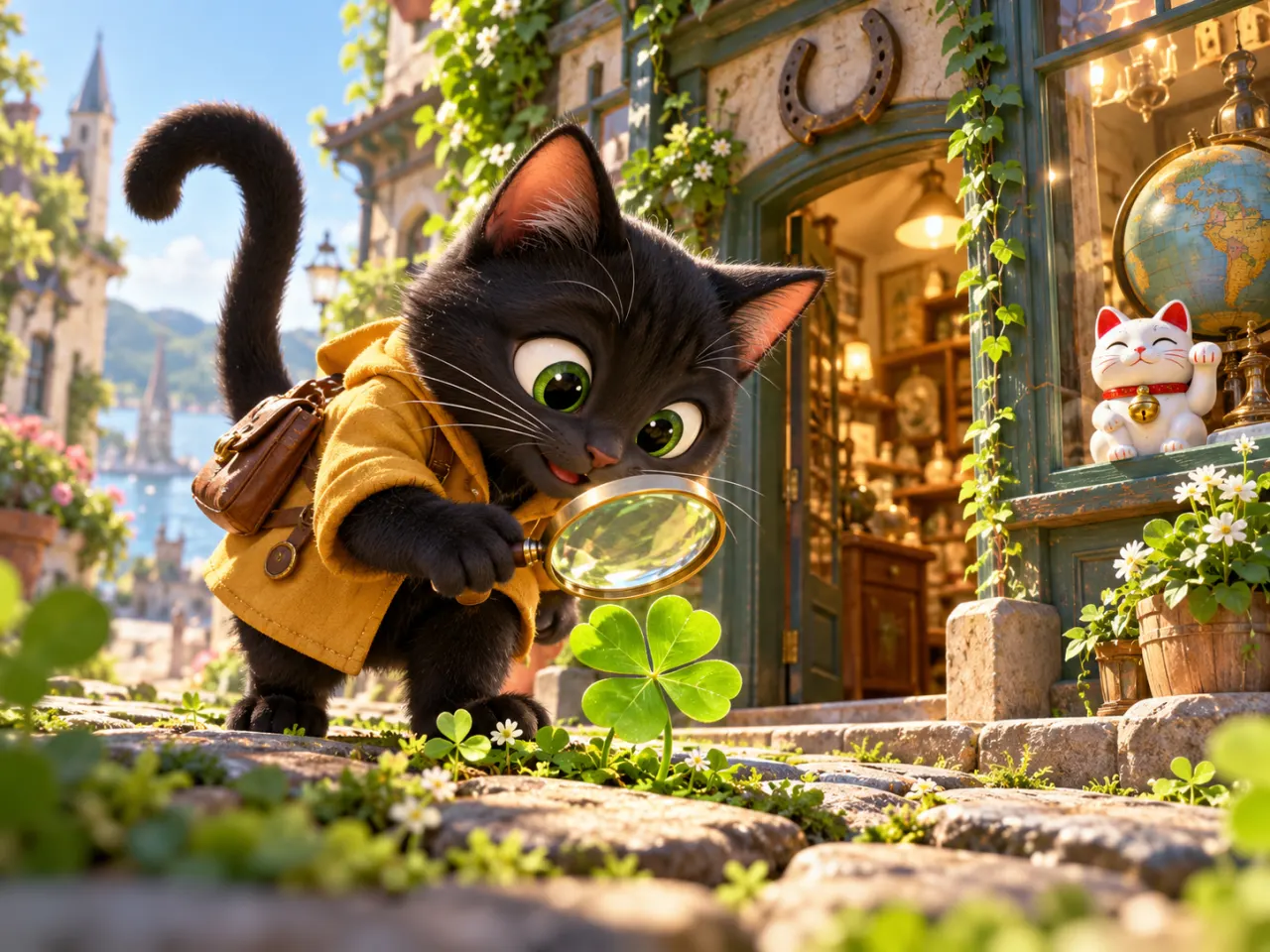
You are hurrying to an important meeting when a black cat crosses the road. Depending on where you grew up, that might feel unfortunate, promising or entirely ordinary.
The cat has not changed. The story surrounding it has.
Good-luck beliefs vary across cultures, often assigning opposite meanings to the same event. They tell us something about how people meet uncertainty, rather than providing a dependable guide to what will happen next.
Familiar Russian signs
Many people follow a custom while saying they do not really believe in it. A brief sit-down before a journey, for example, can be both a family habit and a useful moment to remember a passport.
Common Russian traditions include:
- sitting quietly together before leaving on a trip;
- looking in a mirror after returning for something forgotten;
- knocking on wood after speaking of good fortune;
- hanging a horseshoe above a doorway;
- avoiding whistles indoors, which are said to drive money away;
- avoiding handshakes or passing objects across a threshold;
- treating spilled salt as a sign of an argument;
- associating a full bucket with abundance and an empty one with bad luck;
- avoiding early birthday celebrations.
Most of these protect against an imagined loss rather than promise a reward. Survey results differ according to who is asked and how a question is phrased. Following a custom, believing it literally and remembering a family saying are not the same thing.
Exam rituals
Students have their own versions: a lucky pen, a coin in a shoe, notes under a pillow or a familiar sequence before entering the room. Russian students may jokingly call for an easy pass through an open window. In Japan, Kit Kat became associated with a wish for success through a play on words.
An exam combines preparation with uncertainty, making it a natural place for these rituals to survive. None substitutes for learning the material.
One sign, opposite meanings
Black cats
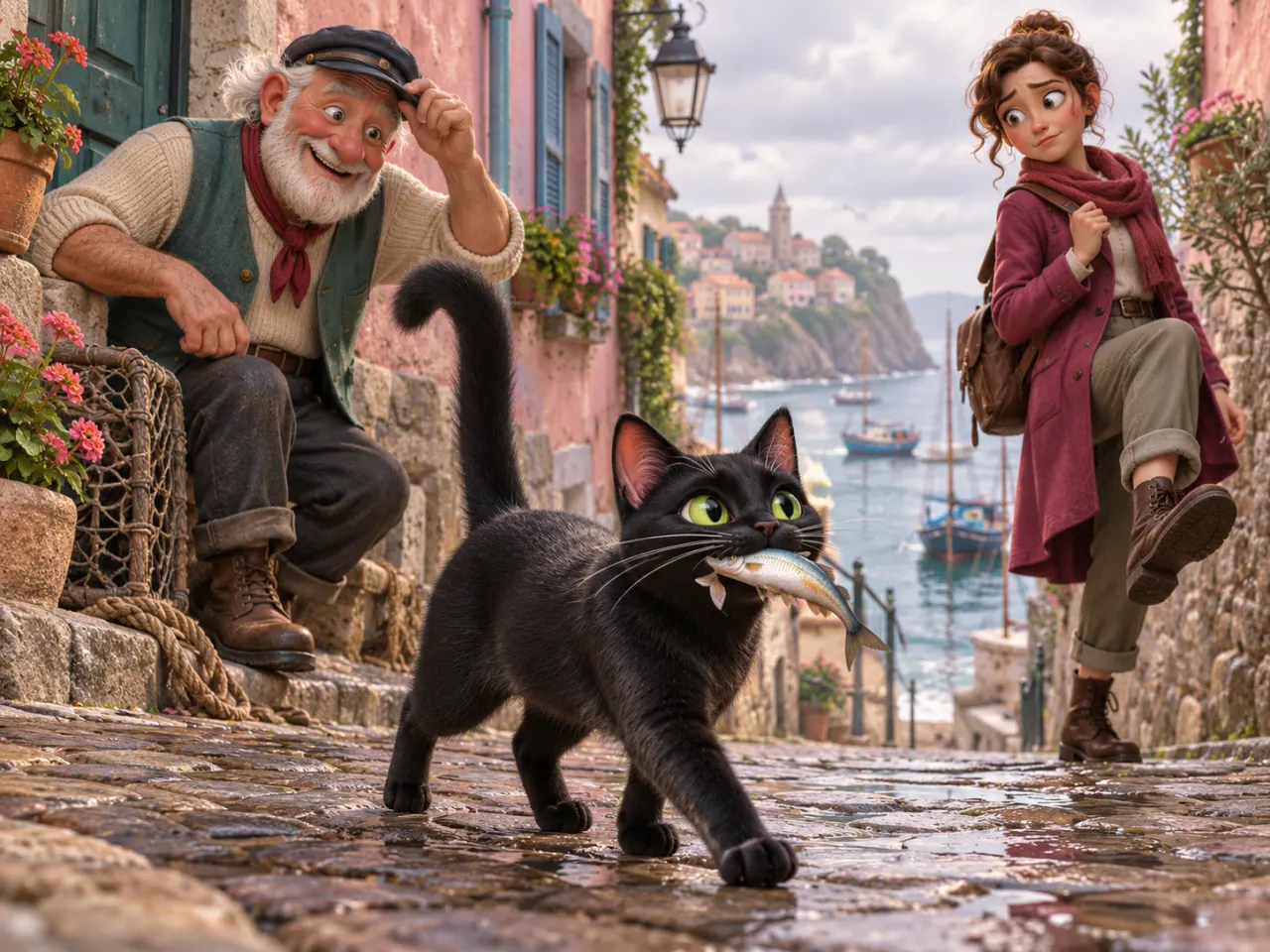
British, Scottish and Japanese traditions include favourable associations with black cats, while other European and American traditions associate them with misfortune. There are local variations within each country too. A confident claim about what “everyone” believes will miss them.
Clothes inside out
In some British and Irish traditions, accidentally wearing clothes inside out is lucky. Slavic sayings can give the same mistake an unfavourable meaning. The contradiction is a useful reminder that the rule comes from a story, not from the fabric.
Spitting
A symbolic spit can be protective in Russian customs. In some Maasai practices, spitting has expressed blessing or respect, while many outsiders would read it as an insult. Meaning depends on the social setting; describing a tradition does not require copying the gesture.
Magpies
British rhymes connect the number of magpies with sorrow or joy, and some people greet a solitary bird. Chinese traditions associate the magpie with happiness, while Russian sayings make it a bearer of news. One bird can carry several cultural messages.
Good-luck objects and their stories
Horseshoes
Horseshoes appear from Ireland to Russia. Associations with protective iron sit alongside the English legend of Saint Dunstan, the blacksmith who made the devil promise to avoid houses displaying a horseshoe.
Even its position is debated: points upward to hold good fortune, or downward to share it with those who enter. The disagreement belongs to the tradition itself.
Four-leaf clover
A four-leaf clover is unusual, which makes finding one feel fortunate. It should not be confused with the three-leaf shamrock associated with Ireland and Saint Patrick. Rarity can give an ordinary object a story without granting it control over events.
A rabbit's foot
The rabbit's foot is particularly associated with African American folk traditions in the southern United States. Claims of one certain ancient Celtic origin are less well supported than popular summaries suggest. A modern charm also has a history worth treating carefully.
Maneki-neko
Japan's beckoning cat often stands near shop entrances. The raised paw is an invitation rather than a Western-style wave. Popular explanations associate different paws with visitors or money, but details vary. The figure expresses a welcome as well as a wish for prosperity.
Daruma
A daruma doll is often sold with blank eyes. An owner paints one when choosing a goal and the second after achieving it. Its rounded, self-righting form also suggests persistence. The useful part of the custom is visible: it keeps an intention in view.
Kit Kat
In Japanese, the brand name resembles kitto katsu, a phrase associated with surely winning. This is a modern example of wordplay becoming a good-luck custom. A tradition does not have to be ancient to become meaningful.
Hamsa and nazar
The hand-shaped hamsa appears in Middle Eastern and North African traditions, including Jewish and Muslim contexts. The blue glass nazar is associated especially with protection against the evil eye in Turkey and nearby regions. These objects have overlapping cultural lives; one simple label cannot cover every believer's understanding.
Lemon and chillies
A lemon with green chillies may be displayed at an Indian shop or on a vehicle as protection against misfortune. It belongs to a particular cultural practice, rather than a universal recipe for successful trade.
Animals associated with good fortune
Ladybirds are welcomed in many European traditions, sometimes with a wish or a children's rhyme. A small British “money spider” has a different fortunate story. German lucky pigs appear in language, marzipan gifts and ornaments.
In Chinese feng shui, a three-legged money toad holds a coin. Elephants carry associations of strength and wisdom in India and Thailand, while the Hindu deity Ganesha is connected with overcoming obstacles. A decorative raised-trunk elephant and religious devotion to Ganesha should not be treated as exactly the same practice.
Lucky and unlucky numbers
- China: Eight with prosperity; A sound association with becoming prosperous.
- China and Japan: Four with death; A similar-sounding word in relevant readings.
- Japan: Nine with suffering; Another sound association.
- Many Western settings: Thirteen with misfortune; Religious, literary and later popular stories.
- Spain and Greece: Tuesday the thirteenth; A different calendar tradition from Friday the thirteenth.
- Italy: Seventeen with misfortune; A traditional wordplay involving Roman numerals.
- Russia and elsewhere: Seven with good fortune; Many familiar religious and cultural appearances.
These are broad patterns, not unanimous national beliefs. Even thirteen can be favourable in an Italian expression about winning. An omitted hotel floor does not remove the actual storey; it changes the label and the feeling attached to it.
Everyday gestures
Touching wood, crossing fingers, throwing a pinch of salt over a shoulder and avoiding ladders are familiar in many places. Italians may touch iron instead of wood. Explanations involving tree spirits, the cross or ancient symbolism are often proposed, but a neat origin story is not always securely documented.
Avoiding a ladder can also have an ordinary safety benefit. That does not validate a supernatural explanation. Similarly, wishing on a shooting star or birthday candles can be an enjoyable pause without becoming a contract with the future.
Religion is not one system of lucky signs
Christian teaching commonly distinguishes faith and prayer from superstition. Islamic teaching also warns against treating bad omens as powers that determine events. Buddhist accounts of action and consequence should not simply be translated into “luck,” and Shinto practices belong within their own religious and cultural setting.
A protective object can be understood differently by different users. Describing it as a charm does not explain every religious meaning it may hold.
Why beliefs survive uncertainty
The lagoon and the open sea
Anthropologist Bronislaw Malinowski described more ritual around dangerous, uncertain fishing than around more predictable work in sheltered water. The influential idea is that ritual becomes attractive where skill matters but cannot guarantee the result.
Sports rituals
George Gmelch's work on baseball described routines around uncertain performance: clothing, gestures and repeated sequences. A player can know how to perform a task and still want reassurance before the outcome is known.
Coincidence and pattern-seeking
B. F. Skinner's experiments with pigeons became a famous discussion of behaviour that seemed linked with randomly delivered food. Applying the whole story directly to human superstition would be too simple, but it illustrates an important question: did the action cause the reward, or merely happen nearby?
People also remember confirming events more easily than uneventful days. One bad meeting after a black cat can become a story; a hundred ordinary crossings do not.
The gambler's fallacy
A sequence of one colour at roulette can make the other colour feel due. Independent outcomes do not acquire a memory because the sequence is striking. A lucky object or an unlucky number cannot turn that feeling into a mathematical advantage.
Psychologist Jane Risen has also described how people may recognise an irrational belief and still follow it. Understanding a mistake and overriding the impulse are separate processes.
Can a charm help at all?
Some experiments, including Lisann Damisch's work, have suggested that lucky cues can affect confidence or persistence. Later findings have not always replicated those effects. The cautious possibility is a change in behaviour or expectation, not a change in the laws of chance.
Richard Wiseman's work with people who considered themselves lucky emphasised noticing opportunities. In a familiar newspaper task, an obvious notice could be missed by someone concentrating narrowly on counting photographs. The lesson is about attention, not a magical personality category.

What is useful to keep
- Keep a harmless custom if it comforts you and does not become compulsory.
- Let go of a sign that makes ordinary life frightening. Other cultures may read the same event differently.
- Prepare for the parts you can influence.
- Leave some attention available for people and opportunities around you.
- Treat a setback as information rather than proof that fortune has abandoned you.
For an interview, a favourite shirt may help you feel settled. Preparation, arriving on time and listening carefully still do the practical work. A cat crossing the road need not decide the morning.
Common questions
Which symbol attracts money?
Many traditions have one, from a lucky eight to a beckoning cat. None has been shown to change financial outcomes by itself.
Why do people knock on wood if they do not believe?
Habit, reassurance and family custom can outlast literal belief. The exact historical origin is uncertain.
Which charm should I choose?
If you want a reminder of hope or a goal, choose something meaningful and affordable. There is no evidence that a more expensive charm has more power.
Is a black cat really unlucky?
No reliable evidence supports that claim. Conflicting cultural meanings are a good reason to enjoy the encounter as an encounter with a cat.
The Luck cards offer another symbolic pause: a Character, a Path and a Sign for reflection. If an animal or lucky object appeared in a dream, describe the whole scene in the dream dictionary, including how it felt to you.
Read next

Dreams about teeth and hair falling out: beyond the bad omen
What research suggests about jaw sensations and teeth dreams, where frightening folk meanings come from, and how to explore appearance, change and vulnerability.

Dreams about ex-partners, cheating and weddings
How memory and relationship concerns enter dreams, why a cheating dream is not evidence, and how to keep its mood from deciding your next conversation.