Dreams about teeth and hair falling out: beyond the bad omen
What research suggests about jaw sensations and teeth dreams, where frightening folk meanings come from, and how to explore appearance, change and vulnerability.
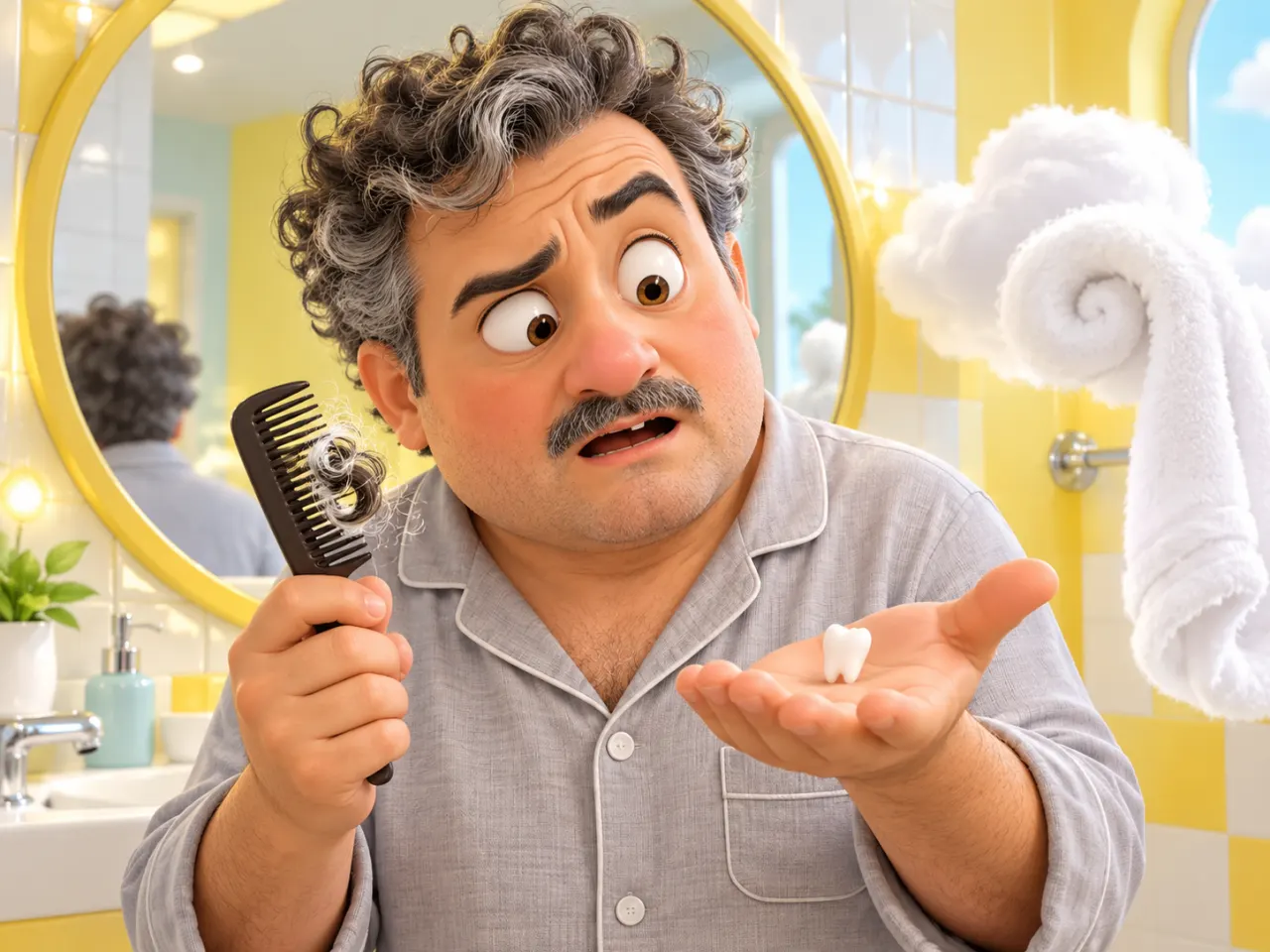
A tooth feels loose. In another moment it is in your hand, followed by several more. You try to speak while they crumble, feeling frightened and exposed. On waking, you check your mouth: everything is still there.
Then you remember a family saying about lost teeth and a death in the family, and the morning becomes anxious.
Dreams of teeth falling out are common, but there is no reliable evidence that they predict a death. Research has explored a possible link with sensations in the teeth and jaw. Personal concerns may also shape the story, without giving it one fixed meaning.
First: a dream is not a prediction
Teeth-loss dreams appear in studies of typical dream themes across different populations. Their frequency alone is a reason not to treat each one as an exceptional warning.
A dream can leave a strong feeling without providing information about a relative's health. Blood in the dream does not change that distinction.
What research found
In a 2018 study at Ben-Gurion University, Naama Rozen and Nirit Soffer-Dudek asked 210 students about dreams, psychological distress and dental sensations. Teeth dreams were associated with reported tension in the teeth, gums or jaw on waking. The study did not find the same association with general psychological distress.
The authors were cautious: this was an association in a particular sample, not proof of a cause and not a diagnosis of sleep bruxism. Reported grinding itself did not show exactly the same pattern as morning discomfort.
One possible account is that a sleeping mind incorporates pressure or irritation into a story about loose or crumbling teeth. That possibility deserves consideration before an alarming symbolic explanation.
Where the frightening family interpretation comes from
In a familiar Russian saying, losing a tooth with blood is linked with losing a blood relative. The word association makes the connection memorable. It does not establish that the dream predicts the event.
The link between teeth and family is much older. Artemidorus compared a mouth with a household and different teeth with different members. Yet even his interpretation changed with circumstances: the same kind of loss could be favourable for someone paying off debts.
Popular Islamic collections also contain maps linking teeth with relatives, alongside interpretations in which teeth falling into a hand mean gain or all teeth falling out mean long life. The range is incompatible with one inevitable ominous message.
A Talmudic story about the interpreter Bar Hedya likewise raises the power and responsibility of interpretation. A frightening explanation can harm the morning even when the dream itself establishes nothing about the future.
Why teeth can appear in a dream
Bodily sensations
Jaw tension, gum discomfort or a dental concern may be incorporated during sleep. If you notice morning pain or repeated discomfort, tell a dentist. A dream alone cannot confirm grinding, and the correct response depends on an actual assessment.
Control, appearance and speech
Symbolic approaches often explore three themes:
- Control: something familiar becomes impossible to hold together.
- Appearance and evaluation: a smile changes while other people watch.
- Speech: words will not come out as intended, or something remains unsaid.
These are reflective possibilities, not findings that override the 2018 study or explain every dream. You may recognise one, several or none.
Change and growing up
Freud offered interpretations involving childhood conflict and sexual fears. Jungian approaches may notice that losing baby teeth was once part of growing up, making loss a possible image of transition. These historical perspectives should be identified as interpretations rather than medical explanations.
What to notice if the dream repeats
Write down whether your jaw or teeth feel uncomfortable in the morning, and whether a dental visit or important conversation has been on your mind. Seek a dentist's advice about actual symptoms. Consider emotional context without assuming a dream has uncovered a hidden problem.
How the scene changes the question
- One loose tooth: Something feels uncertain, or a real dental sensation is present.
- Crumbling teeth: Physical tension, vulnerability or difficulty keeping something together.
- Front teeth falling out: Appearance, speaking or being watched.
- Spitting out teeth: An unpleasant bodily scene, a wish to get rid of something or concern about speech.
- Pulling out a tooth: A difficult decision or a recent dental association.
- New teeth appearing: Recovery, change or a familiar childhood memory.
- Visiting a dentist: A real appointment, a concern or an image of repairing something.
- Someone else's teeth: Your associations with that person, not a diagnosis of their health.
A table cannot decide which explanation applies. The detail that matters may be the feeling, a recent event or the body rather than the symbolic category.
Example: before a presentation
You dream that your front teeth crumble while an audience watches. In the morning your jaw aches, and you remember tomorrow's presentation.
There may be two ordinary influences: tension in the mouth and concern about speaking under evaluation. A practical response could include discussing persistent discomfort with a dentist and rehearsing the opening of the presentation. The dream does not establish that you will fail.
Dreams about hair falling out
Dream dictionaries disagree
Miller links some hair-loss scenes with financial mistakes or deprivation. Other collections warn of dishonest people, while books attributed to Vanga may offer a favourable change. The variety is a reason to avoid treating one entry as a reliable forecast.
Personal associations
Hair can matter to identity, beauty, age, health, religion or belonging. A dream of losing it might connect with exposure or change, but the meaning is not identical for everyone. Someone who has chosen to shave their head may experience the scene differently from someone worried about illness.
A dream can also reflect a concern already present in waking life. If hair is actually falling out, that is a real question for a healthcare professional, separate from interpreting the dream.
Different scenes
Clumps on a brush may bring loss or lack of control to mind. Cutting hair can feel chosen and freeing, or unwanted and upsetting. Grey hair may suggest experience to one person and ageing to another. Regrowth may feel reassuring, but it cannot promise recovery from an actual condition.
Include the emotion when describing the scene. A striking image alone cannot tell an interpreter whether you felt relief, embarrassment or grief.

Teeth and hair in cultural traditions
Strength and hair
The biblical story of Samson links hair with strength. Slavic wedding practices changed a woman's hairstyle as her social role changed. Monastic tonsure and the shaving of recruits also mark transitions in particular settings.
Such practices help explain why hair can carry more than a cosmetic meaning. They do not create one universal interpretation for a hair-loss dream.
Cut hair and protection
Some folk customs carefully disposed of cut hair because it was considered connected with the person. Stories about birds carrying hair into nests or magic performed with hair belong to that cultural history, not established causes of illness.
Losing a baby tooth
Many cultures give childhood tooth loss an encouraging story:
- A Russian child might offer the old tooth to a mouse and ask for a strong new one.
- Ratoncito Perez brings gifts in Spanish-speaking traditions.
- The tooth fairy is familiar in English-speaking countries.
- Japanese customs include throwing certain baby teeth towards a roof or beneath a floor.
A lost tooth can therefore signify growth within folklore as readily as loss. Selecting only the frightening tradition gives a misleading impression of the whole history.
Why these dreams can seem prophetic
We remember a striking coincidence while forgetting many uneventful mornings. After a later event, memory may reshape the dream to fit. An anxious interpretation can also change how we sleep, concentrate or interact with people, making the day harder without proving the prediction.
Sometimes the body supplies an earlier clue to an ordinary problem: a sore tooth enters a dream before you pay close attention to it while awake. That is a reason to notice symptoms, not a warning that someone else will die.
Common questions
Does blood mean a relative will die?
No reliable evidence supports that claim. It is a traditional association, not a finding about dream prediction.
What if all my teeth fall out in the dream?
The scale of the scene does not make it more prophetic. Consider physical sensations and the feelings in the dream, without imposing a single meaning.
Does hair loss in a dream mean I will become ill?
A dream cannot diagnose illness. Actual changes in hair or health should be assessed on their own facts.
Should I see a dentist because of a dream?
The dream alone is not a diagnosis. Repeated morning jaw pain, tooth discomfort or other real symptoms are useful reasons to discuss what is happening with a dentist.
What if the dream leaves me anxious?
Use the Venting page to describe the feeling, or read how to settle after a nightmare. Persistent distress deserves support.
You can also describe the full scene in the Path of Dreams dream dictionary. Include what happened in your mouth or hair, how you felt, and anything relevant from waking life. A thoughtful interpretation should give you room to reflect rather than a reason to fear the day.
Read next

Dreams about ex-partners, cheating and weddings
How memory and relationship concerns enter dreams, why a cheating dream is not evidence, and how to keep its mood from deciding your next conversation.

Dreams about death, fire, war and floods: understanding the fear
Why frightening disaster dreams can feel real, what their different scenes may bring up, and how to settle without treating a nightmare as a forecast.