Dreams about pregnancy, birth and children: what to consider
What pregnancy and baby dreams can bring to mind, why dreams may feel vivid during pregnancy, and how folklore differs from medical information.
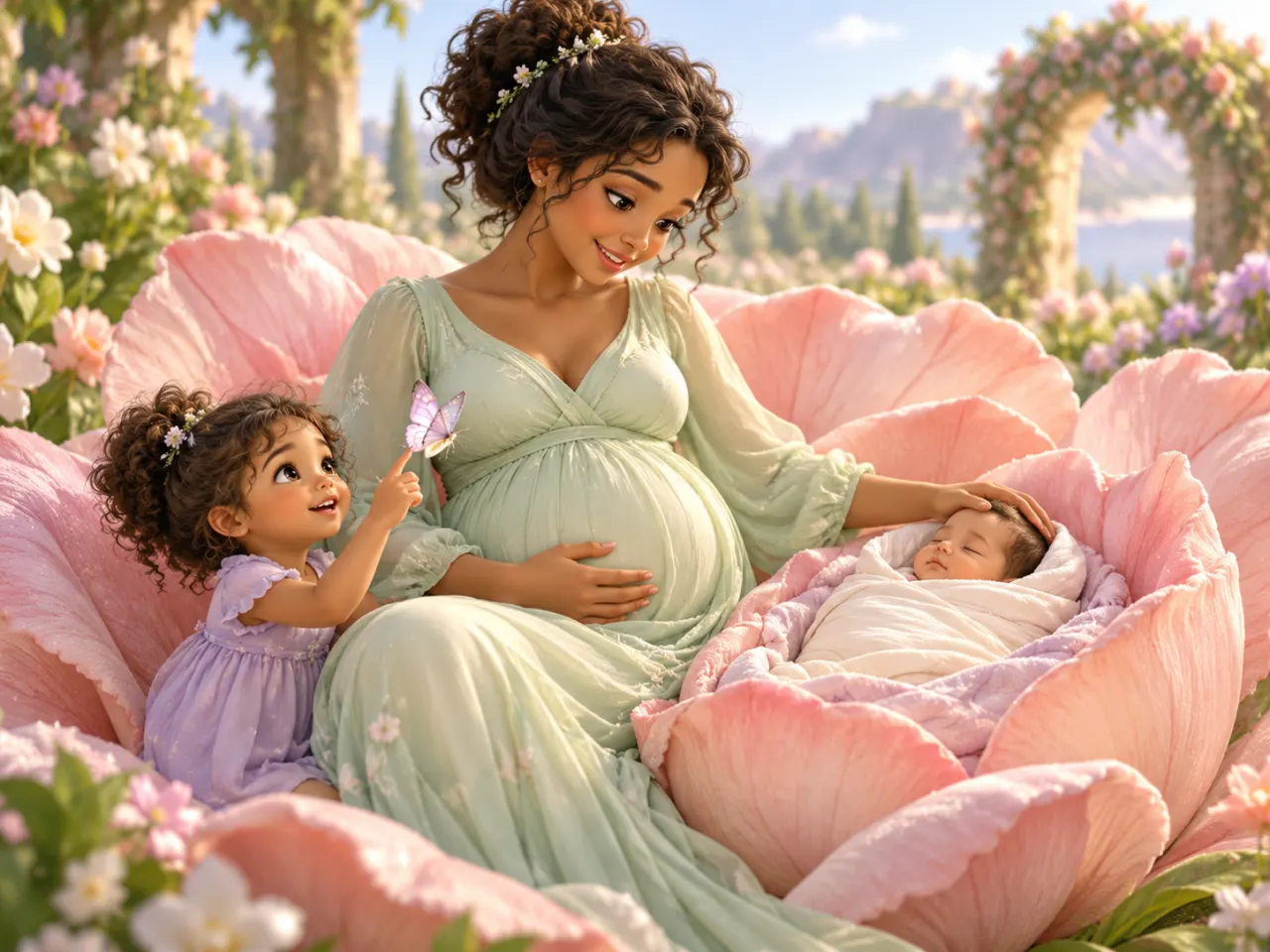
You dream that you are pregnant, although it is not something you are planning. Or you give birth and the baby is already talking. You may wake delighted, bewildered or worried that the dream has revealed something important.
Dreams about pregnancy, birth and children occur among people in many different circumstances, including people who are not pregnant and people who cannot become pregnant.
A dream is not a pregnancy test and cannot predict a baby's sex or the course of a birth. It may reflect wishes, worries, responsibility or a sense of something new developing in your life.
Dreaming that you are pregnant
When you are not pregnant
A new project, relationship or role can make pregnancy a useful image for something taking shape. Jungian approaches sometimes use the idea of a psychological pregnancy for a possibility not yet ready to emerge.
The connection can also be literal in a different sense: if you hope for a baby, the dream may reflect that hope; if you fear pregnancy, it may reflect that fear. Neither establishes a medical fact.
Folk dictionaries offer contradictory meanings, including profit, change and burdens. The range itself is a reason to begin with your circumstances rather than select one entry as the answer.
Young or unmarried dreamers
Older dictionaries sometimes moralise about pregnancy outside marriage. Those entries reflect the social expectations of their period, not a judgement about the dreamer. A contemporary reading might explore growing up, changing relationships or feeling that life is moving too quickly.
You do not have to accept shame from a historical interpretation.
When you are expecting a baby
Dreaming about pregnancy is an understandable continuation of daily life. Preparation, appointments, bodily changes and questions about the future occupy attention while awake, so they may appear at night too.
Even a reassuring dictionary entry cannot promise a particular birth outcome. For medical questions, use your maternity care team rather than the dream's tone.
When a man dreams of pregnancy
The scene might involve a partner's pregnancy or the dreamer's own impossible pregnancy. It can be explored through expectations of parenthood, responsibility, creativity or a private concern. An unusual dream is not a test of identity or character.
When someone else is pregnant
A friend, sister or stranger may bring change, comparison or shifting relationships to mind. It can also be as ordinary as something you recently discussed or noticed. The dream does not reveal a secret about the other person's body.
Dreams about giving birth
Birth can provide an image of transition: something long in preparation finally becomes visible. Easy and difficult births may invite different associations, but the dream is not a rehearsal whose ending determines real events.
Consider whether the strongest feeling was relief, pain, fear, surprise or joy. A difficult scene ending safely may resemble completing a demanding task. Helping someone give birth may bring responsibility or support to mind.
A boy or a girl
Folk traditions disagree sharply. Russian wordplay links a girl with wonder and a boy with worries, while some Islamic popular interpretations assign different fortunes. These are cultural patterns, not a method of determining a child's sex.
Unusual births
People sometimes dream of giving birth to a kitten, a fish, a doll or a child who can immediately speak. Dream researcher Patricia Garfield described such imaginative transformations among pregnancy dreams. They show the flexibility of dream imagery; they do not indicate that anything is wrong with a baby.

Babies and children in dreams
- Holding a baby: Care, vulnerability or a new responsibility.
- A crying baby: Something demanding attention, including your own needs.
- A happy child: Warmth, play or hope.
- A lost child: Uncertainty, responsibility or fear of failing someone.
- Caring for someone else's child: Helping, learning or taking on a role.
- A child in danger: Protective concern, especially for parents.
These are possibilities, not fixed meanings. A dream about danger does not show that the danger will occur.
Why parents dream of threats to a child
Caring for someone vulnerable can make safety highly salient. Threat-simulation theories, including Antti Revonsuo's work, offer one account of frightening dream scenarios. It would be too strong to claim that every such dream is beneficial or that it simply measures how much you love your child.
What matters practically is the distress it causes. Repeated frightening scenes can be discussed with a professional, and imagery rehearsal may be one approach worth exploring.
Research on dreams during pregnancy
Babies appear more often
Research from Tore Nielsen's laboratory has compared dream reports from pregnant and non-pregnant participants. Dreams about babies and children were more frequent during pregnancy, consistent with the continuity between daytime concerns and dream content.
This does not mean that every pregnant person has the same dreams, or that someone without baby dreams is less prepared.
Why recall may become more vivid
Pregnancy can bring changes in sleep, comfort and the frequency of awakenings. Waking near a dream makes it easier to remember. A stronger memory of dreaming does not necessarily mean the brain has suddenly begun dreaming far more.
Stress and nightmares
Research by Michael Schredl and colleagues has found an association between stress and nightmares in late pregnancy. Small studies have also explored possible relationships between anxious dreams and adjustment around birth.
Such findings do not mean that an anxious dream predicts an easier labour or that a calm dream predicts difficulty. Associations in groups cannot tell an individual what will happen.
Themes over time
Garfield described changing themes during pregnancy: water and small creatures early on, animal young and caregiving later, and journeys or approaching events near birth. These are observations and interpretive suggestions, not a timetable you need to match.
If a dream worries you
Record it briefly and talk with someone supportive if that helps. Distinguish the imagined scene from any actual physical symptoms or medical concern. If distress persists, discuss it with a maternity professional or mental health clinician rather than trying to find a reassuring prediction online.
Dreams after birth
Nielsen and Tyna Paquette described postpartum experiences sometimes called the “baby in bed” dream: a parent believes the baby is lost among the bedding and searches in alarm before becoming fully awake.
Interrupted sleep and intense responsibility can make these experiences convincing. The dream is not evidence of carelessness. A calm check of where the baby actually is can help reorient you.
If episodes repeat, involve movements that could be unsafe or come with continuing anxiety, seek advice from a healthcare professional. Persistent distress deserves support rather than an expectation that a new parent should simply endure it.

Myths, religions and history
Dreams announcing a birth
Stories about important births often include a mother's dream. In Buddhist tradition, Queen Maya dreams of a white elephant before the birth of the future Buddha. Such narratives give a birth religious significance; they are not evidence for everyday dream prediction.
Korean taemong traditions describe conception dreams involving animals, fruit or precious objects, sometimes dreamed by a relative. Their importance can be familial and cultural even though they do not reliably identify a future child's sex or personality.
The same dream, different lives
Artemidorus told of pregnant women who dreamed of giving birth to a snake, then interpreted the stories differently according to their circumstances. Whatever one makes of his divination, the example resists the modern assumption that one image must equal one outcome.
Interpretation can change the experience
The Talmud includes stories in which similar dreams receive favourable or unfavourable readings from an interpreter. They raise questions about the power and responsibility of interpretation. A frightening reading can affect a person's day without being a true forecast.
Gift and burden
Popular Islamic interpretations may describe pregnancy through increase, blessing or a burden carried privately. The dreamer's circumstances influence the reading. A popular dictionary should not be mistaken for the whole religious tradition.
Psychological approaches
Freud linked birth imagery with anxiety and wishes, while Jung gave the child a symbolic role associated with future possibilities. Contemporary continuity approaches begin more directly with the dreamer's waking concerns.
You do not need to adopt a complete theory to ask a useful question: what is new, demanding or vulnerable in my life, and how did this dream make me feel about it?
Common questions
Does dreaming of pregnancy mean I am pregnant?
No. If pregnancy is possible, a test and appropriate healthcare can answer the question; a dream cannot.
Why dream of birth when I am not pregnant?
Birth imagery may connect with a transition, a project, stories you have heard or many other associations. It has no single automatic meaning.
Can a dream reveal a baby's sex?
There is no reliable evidence that it can. Folk predictions are not a substitute for medical information.
Are frightening pregnancy dreams a bad sign?
They are not a forecast of harm. If they are upsetting or disrupting sleep, ask for support.
What if I dream of another person's child?
Begin with your relationship to the child and the feelings in the scene. Avoid turning the dream into a claim about that child's future.
Describe the scene and your circumstances in the Path of Dreams dream dictionary. Include what you felt: delight, fear, tenderness or confusion often makes a more useful starting point than the image alone.
Read next

Dreams about teeth and hair falling out: beyond the bad omen
What research suggests about jaw sensations and teeth dreams, where frightening folk meanings come from, and how to explore appearance, change and vulnerability.

Dreams about ex-partners, cheating and weddings
How memory and relationship concerns enter dreams, why a cheating dream is not evidence, and how to keep its mood from deciding your next conversation.